


Royal Porthcawl Golf Club
Porthcawl, Bridgend · Designed by Charles Gibson (1891); Harry Colt (1913) · Est. 1891
Why this Edge Score: Wales's finest links and our top-ranked course in the country, Porthcawl keeps the sea in view from every hole and has hosted the Amateur and Senior Open. Exposed, honest and beautifully conditioned, it earns a score just short of the world's very best.
Royal Porthcawl began in 1891, when a group of Cardiff businessmen met to found a golf club and engaged Charles Gibson, the professional at Westward Ho!, to lay out the first nine holes on the duneland at Rest Bay. A second nine followed in 1895, and Ramsay Hunter extended the links to a full eighteen in 1897; King Edward VII granted the royal title in 1909. From the beginning the ground gave the club its signature — a shelf of links where the Bristol Channel meets the Glamorgan coast, and where, uniquely among Britain's great courses, the sea is in view from every single hole.
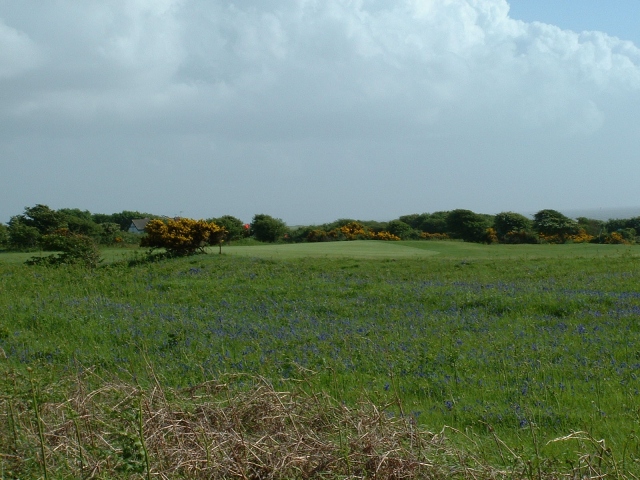
There are no trees and no shelter. The opening three holes run right along the shore, the shingle beach in play off a pulled shot, before the course climbs onto higher duneland and turns for home into the prevailing wind. Harry Colt reworked the links from 1913 and is credited with eight of its holes — the 4th, 5th, 6th, 8th, 9th, 14th, 15th and 18th — and it is the closing stretch that lingers: the 18th drops to an away-sloping green set right at the sea, one of the most memorable finishes in the British game. At barely 7,000 yards and par 72 it is not long, but in a Channel gale it is as searching a test as exists.
The honours board is the strongest in Wales. Royal Porthcawl has hosted the Amateur Championship six times, the Curtis Cup in 1964, the Walker Cup in 1995 — won by Great Britain & Ireland — and the Senior Open Championship in 2014, 2017 and 2023. Bernhard Langer won the 2014 Senior Open wire-to-wire here, finishing 18-under and thirteen shots clear of the field. Whenever the R&A discusses a first Open Championship on Welsh soil, Porthcawl is the name mentioned first.
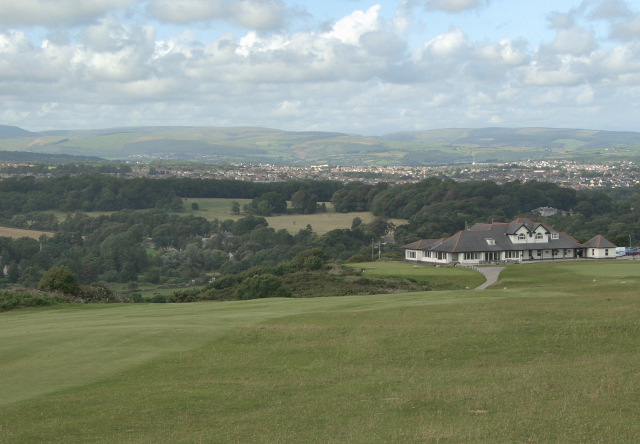
For all its pedigree the club is welcoming and gloriously old-fashioned: a low white clubhouse above the beach, fast true greens, and links golf stripped back to its essentials. Weekday green fees traditionally include a Welsh breakfast or lunch in the clubhouse — a civilised touch before a bracing round.
Holes worth knowing
- 118th (par-4) — the links drops to an away-sloping green set right in front of the sea, the clubhouse behind. The downhill approach has to hold a green running towards the beach; one of the great closing holes in Britain.
- 21st–3rd along the shore — the round opens right on the beach, the shingle and the Bristol Channel a hooked shot away. Few courses put you beside the sea so immediately.
Highlights
- Sea in view from every one of the 18 holes
- Walker Cup 1995, Curtis Cup 1964 & three Senior Opens
- Harry Colt links finishing at a green set by the sea
- The course most tipped for a first Welsh Open
Good to know
- →Weekday green fees usually include a Welsh breakfast or lunch in the clubhouse — time your tee time to make the most of it, then linger over the view across the Bristol Channel.
- →There are no trees to read the wind by and no shelter from it: Porthcawl in a Channel blow is a different course from Porthcawl on a calm morning. Take one more club into the greens and keep the ball under the wind on the exposed run home.
- →Rest Bay below the links is a Blue Flag surfing beach with a coast-path café; the town has the old-school Coney Beach funfair and a long promenade for anyone not playing.
- →Ten minutes east, Merthyr Mawr has some of the highest sand dunes in Europe — they stood in for the desert in Lawrence of Arabia — and the stepping-stones by the ruined Ogmore Castle make a lovely short walk.
- →It sits just off the M4 between Cardiff and Swansea, so pair it with Pyle & Kenfig and Southerndown next door for a three-links South Wales trip; Cardiff airport is 35 minutes away.
Visitor Information
Know before you go
Getting There
Where to Stay

Live tee-time availability via Golfscape
or book direct with the club →Plan your full Wales itinerary
Course Facts
Destination guide
Golf in South Wales
Courses, hotels, restaurants and things to do beyond the fairways.
Read the guide →
Guide
Best golf courses in Wales
Our ranked pick of the finest courses to play across Wales.
Read the guide →
Guide
Links golf in Wales
What makes the Wales links special, and where to play them.
Read the guide →