At a glance
- Top ranked
- Royal County Down · Ballybunion · Waterville · Royal Portrush
- Handicap required
- 28 or under (men) · 36 (women) at most top clubs
- Best season
- April–October (year-round play possible)
- Key adjustment
- Ground game — bump and run over aerial approaches
- Caddies
- Available at most top venues — strongly recommended
What links golf actually is
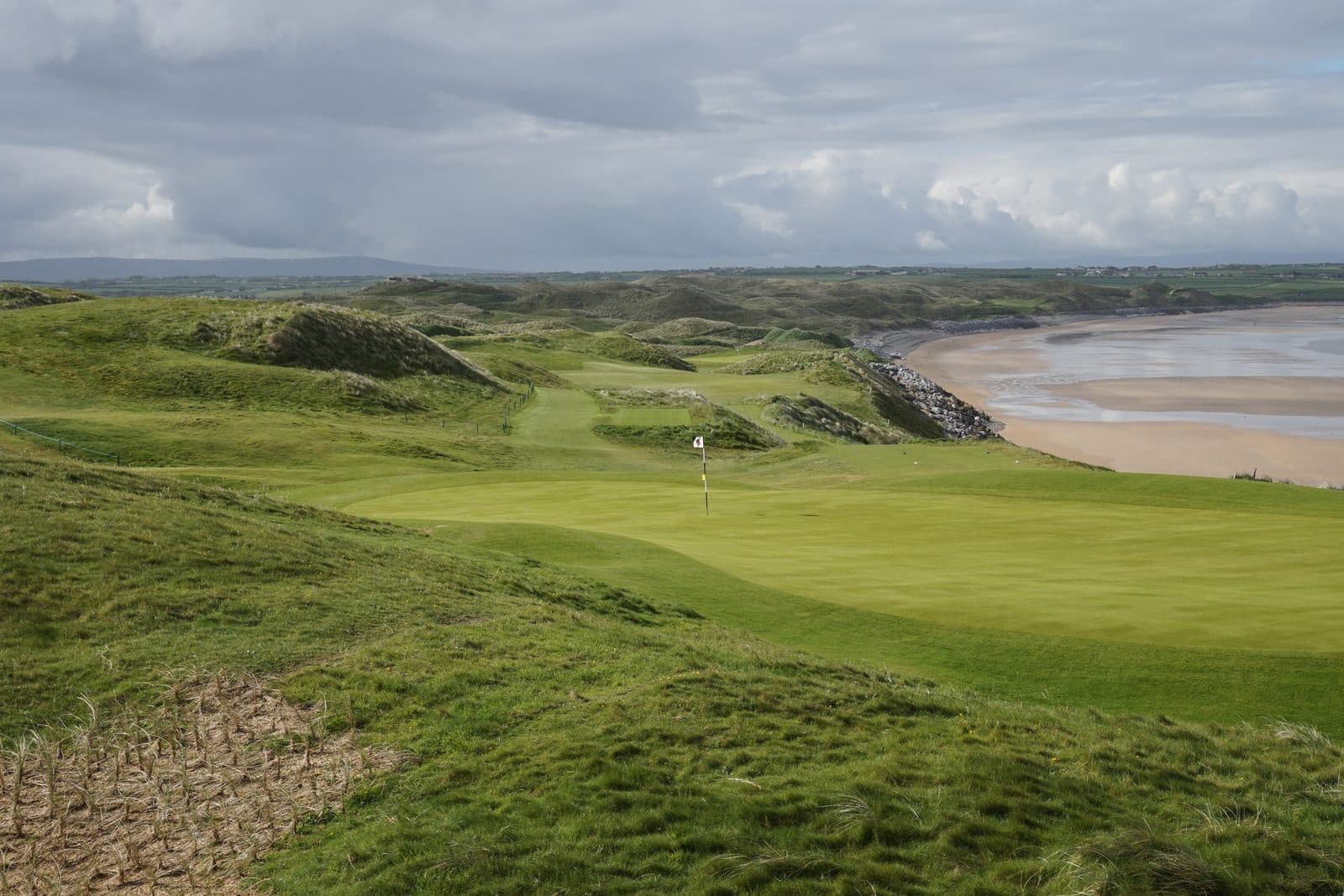
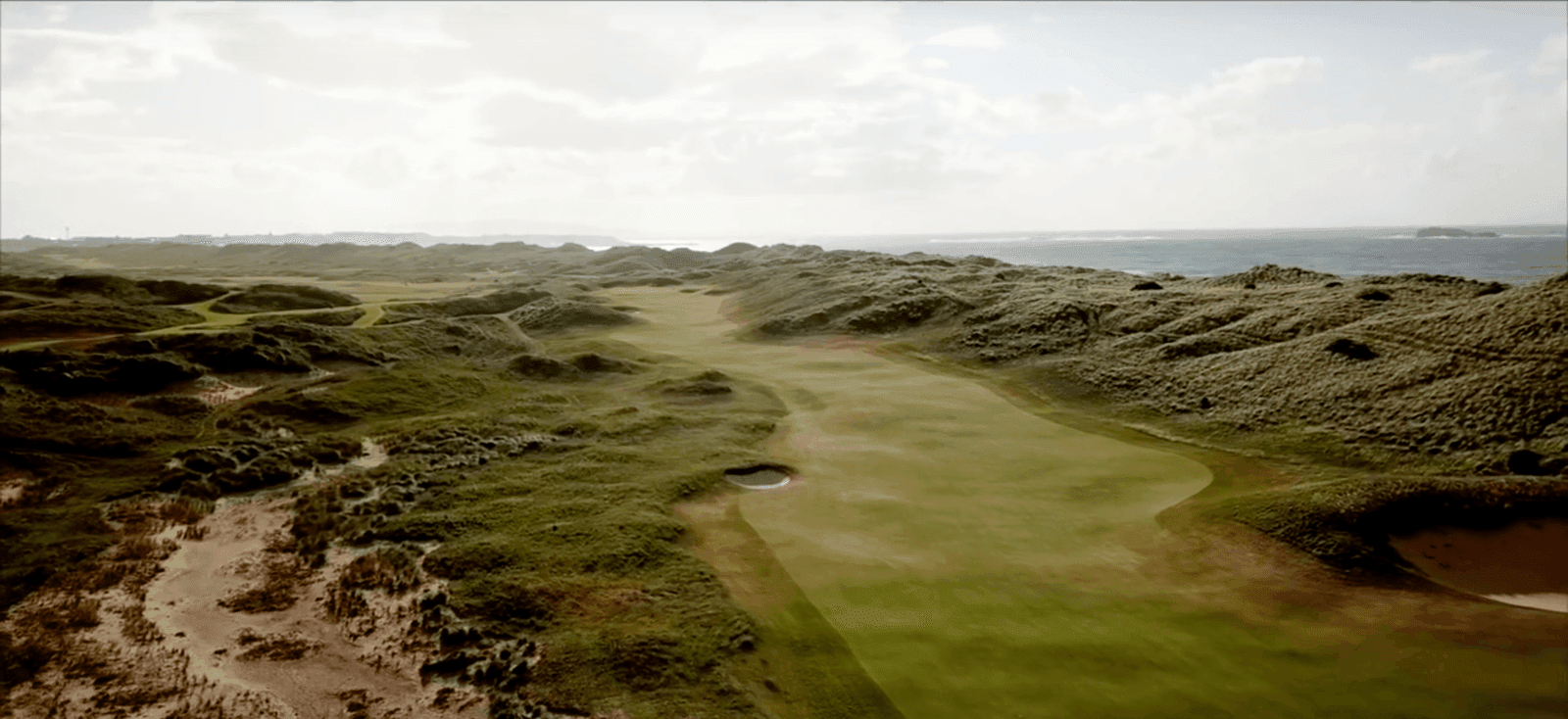
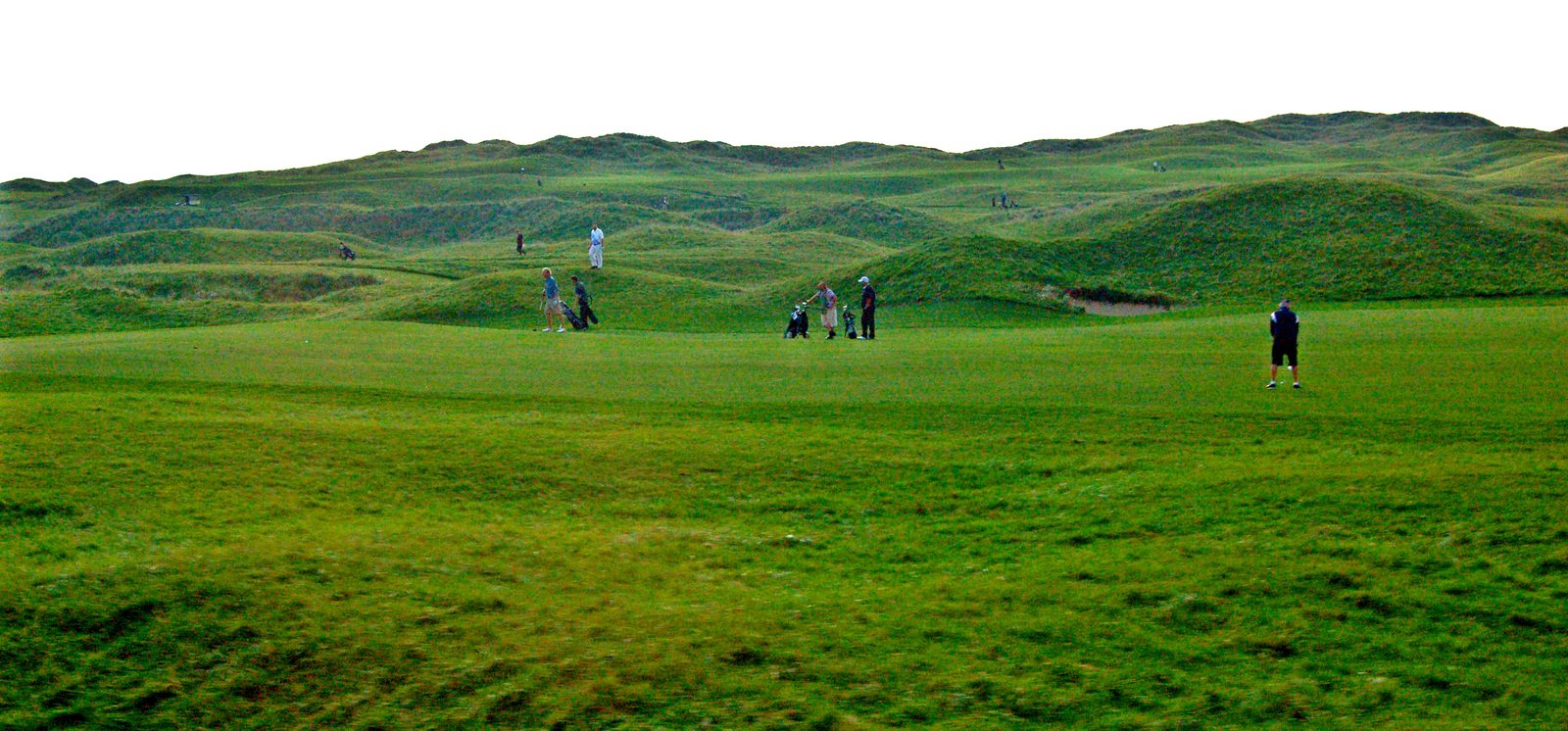
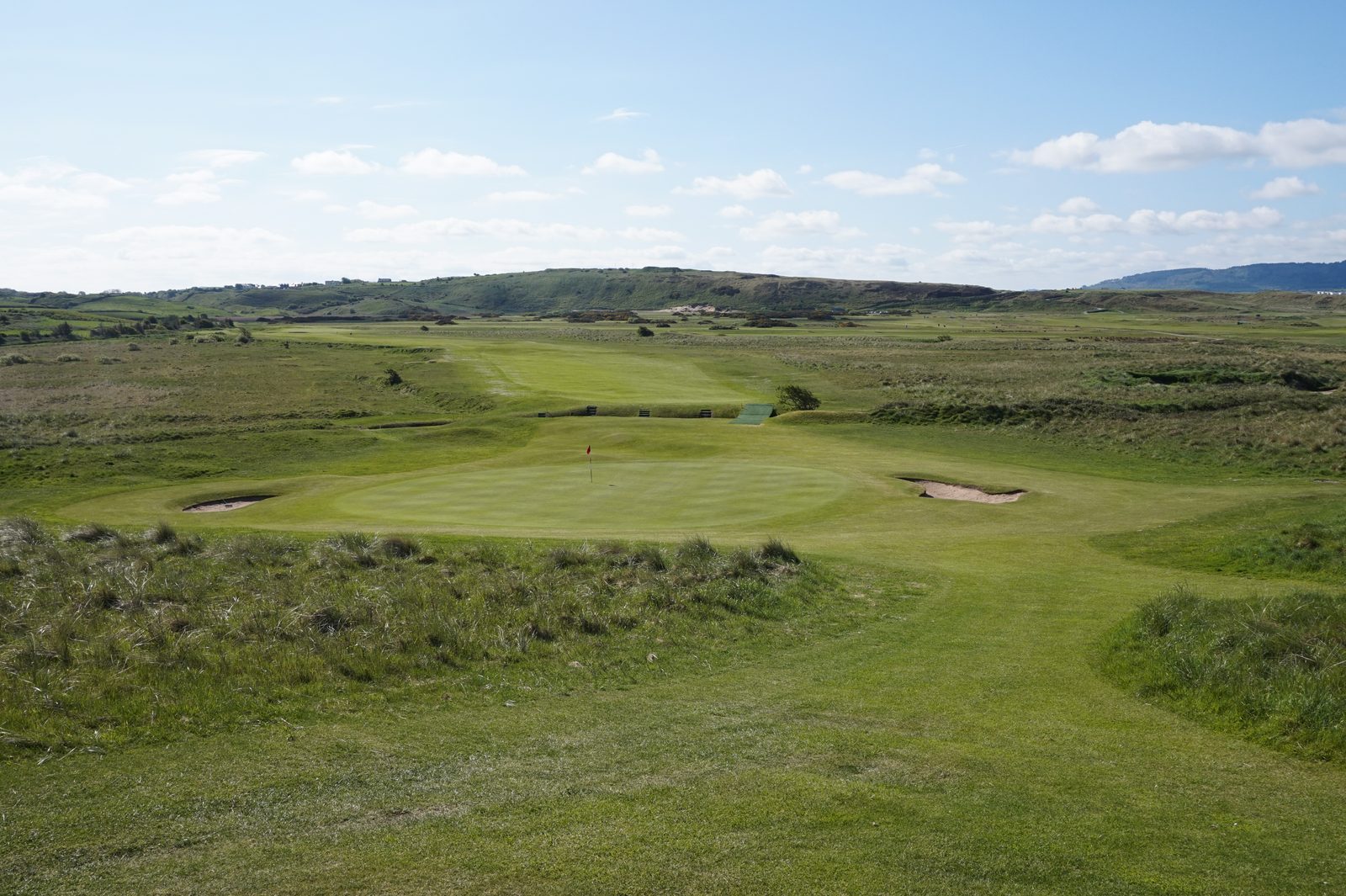
Links golf is not played on a manicured park. It was never meant to be. The original courses grew on the strips of low-lying land — the “links” — between the sea and the farmland, where the ground is sandy, the grass is fine, and the wind is constant. No trees. No shelter. No predictability.
The ball behaves differently here. It runs further along firm ground. It curves more in a crosswind. It bounces off slopes in ways that parkland golfers never encounter. A perfectly struck shot can finish thirty yards from where it should. A mishit can run through a gap and find the green. Links golf humbles and delights in equal measure, often on the same hole.
It is also, once you understand it, the most absorbing form of the game. Every round is different. The course changes with the wind direction. A course you played in sunshine plays as a different test entirely in a 20mph westerly. That variability is not a flaw — it is the whole point.
Why Ireland
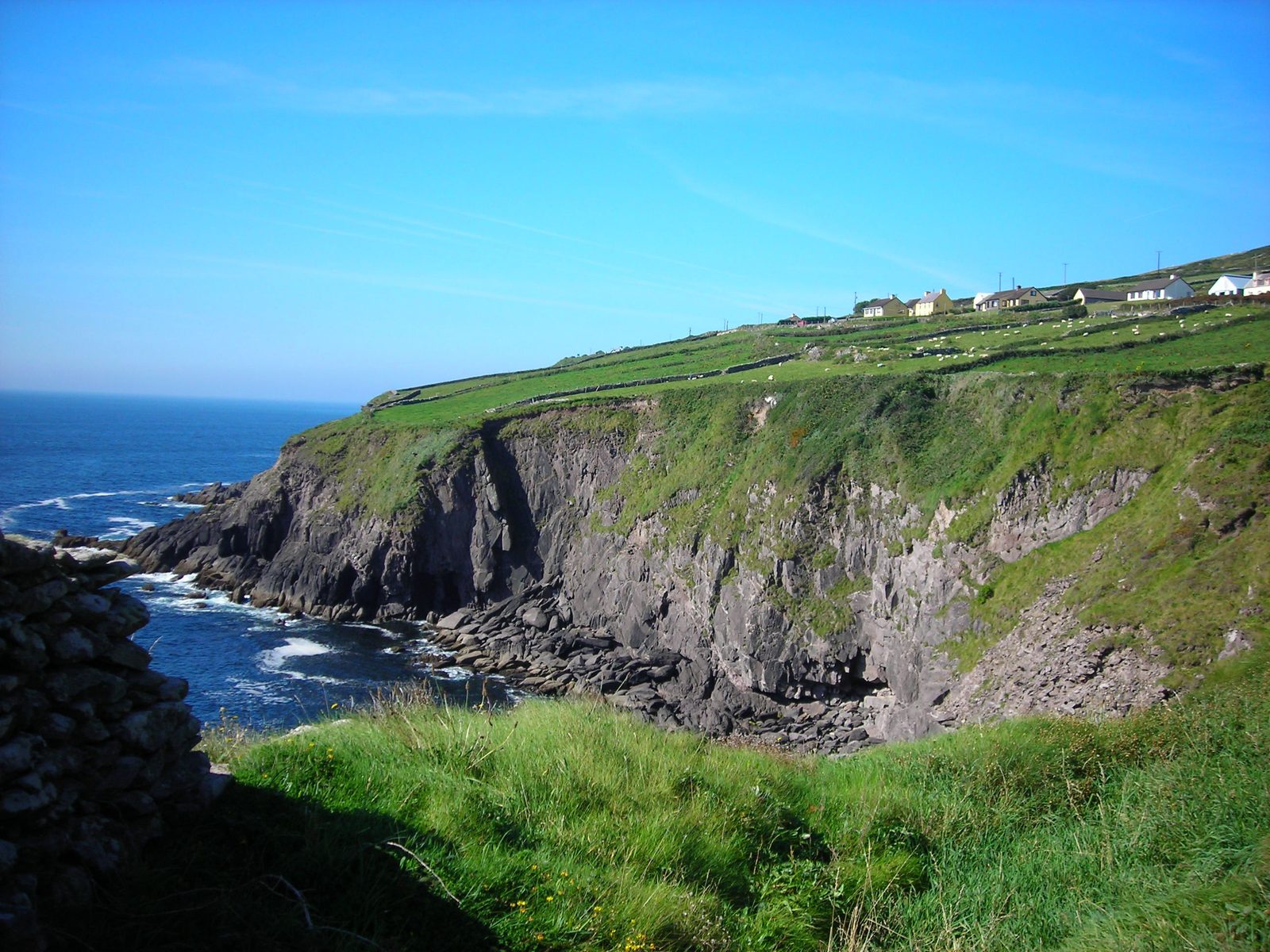
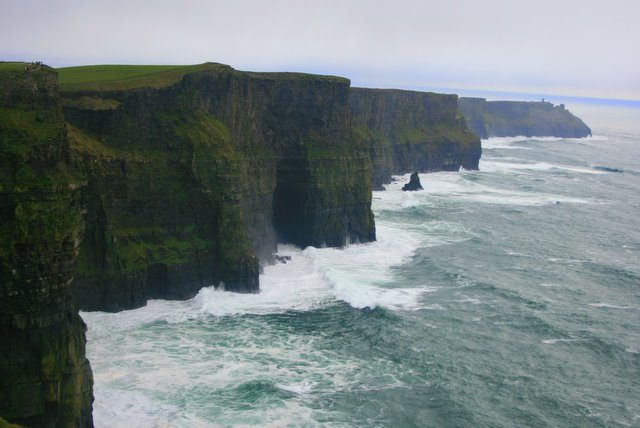
Ireland has a higher concentration of great links courses than almost anywhere else in the world. The west and north coasts face the Atlantic directly, which gives them the combination of sandy terrain, prevailing wind, and dramatic landscape that makes links golf what it is. The land was shaped by the sea over thousands of years before anyone thought to put a flagstick in it.
The courses are also, by international standards, accessible. Ireland does not have the same private member culture as England. Most of the great links courses welcome visitors, take bookings in advance, and don't require introduction from a member. A visitor can play Ballybunion, Lahinch, and Royal County Down on the same trip. That combination — world-class courses, open to visitors, in extraordinary landscape — is what makes Ireland the top destination for links golf travel.
What to expect on the course
Wind is the primary factor. A calm day at Lahinch is a different course to the same layout in a 25mph westerly. Learn to keep the ball low. The bump and run — a low punch that uses the ground — is more useful here than the high approach that parkland golfers rely on.
Firm and fast fairways are the norm, particularly in summer. Links turf is sandy and drains quickly. The ball runs. Club selection from the fairway changes — you often need less club because the ball will run onto the green rather than needing to fly all the way there. On a downwind hole on a firm summer course, the ball can run extraordinary distances.
Blind shots are part of the deal. Links courses were routed around the natural terrain, not engineered on flat ground. At Ballybunion Old Course you aim at a post or a chimney on the horizon and trust that the fairway is over the rise. This is not a design flaw. It is what makes these courses feel like they belong to the land rather than the other way around.
Accept that some shots will get a bad bounce. That is links golf. The best players on links courses are not the ones who hit perfect shots — they are the ones who accept imperfect results and play the next shot well.
The courses — by region
Kerry and Clare
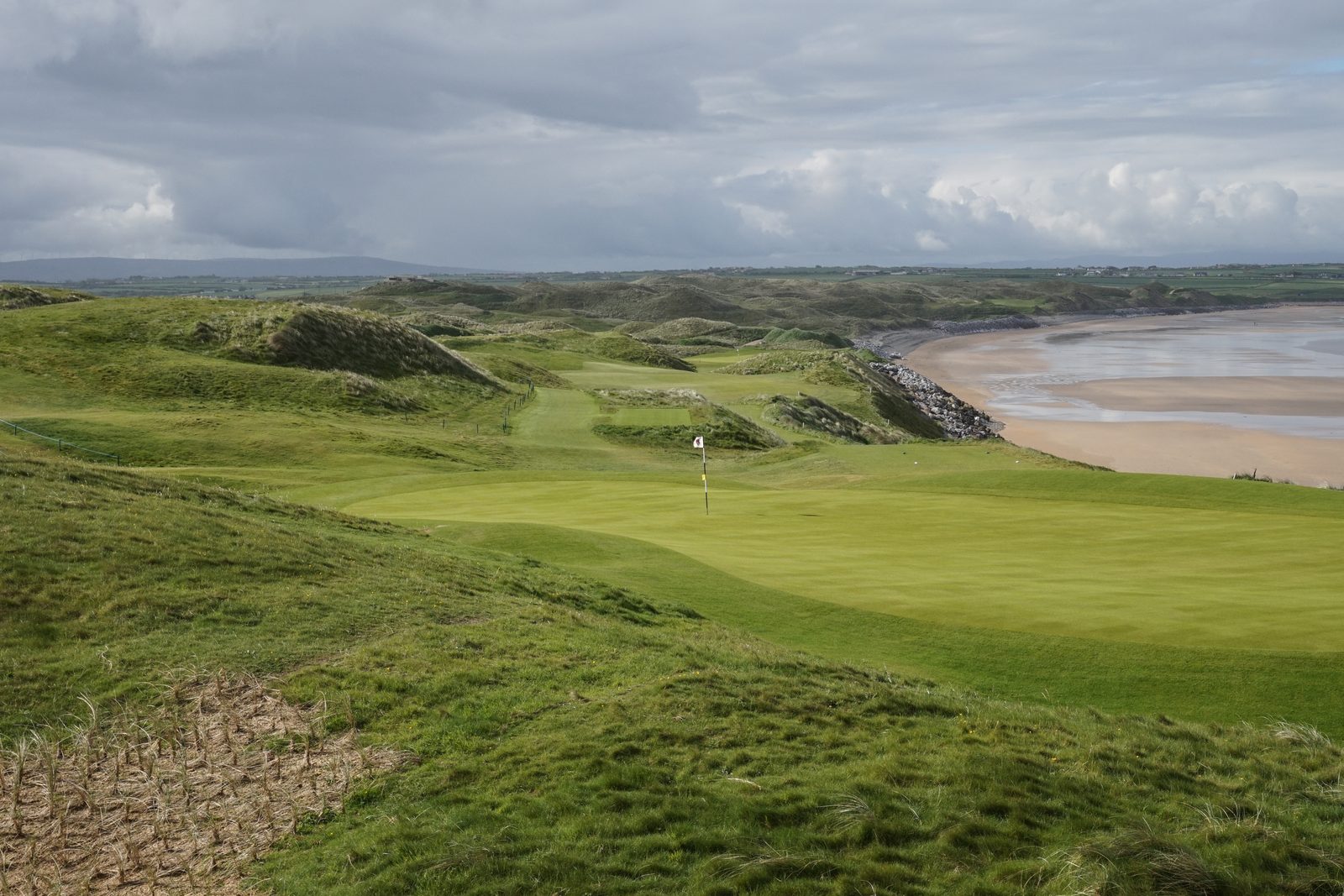
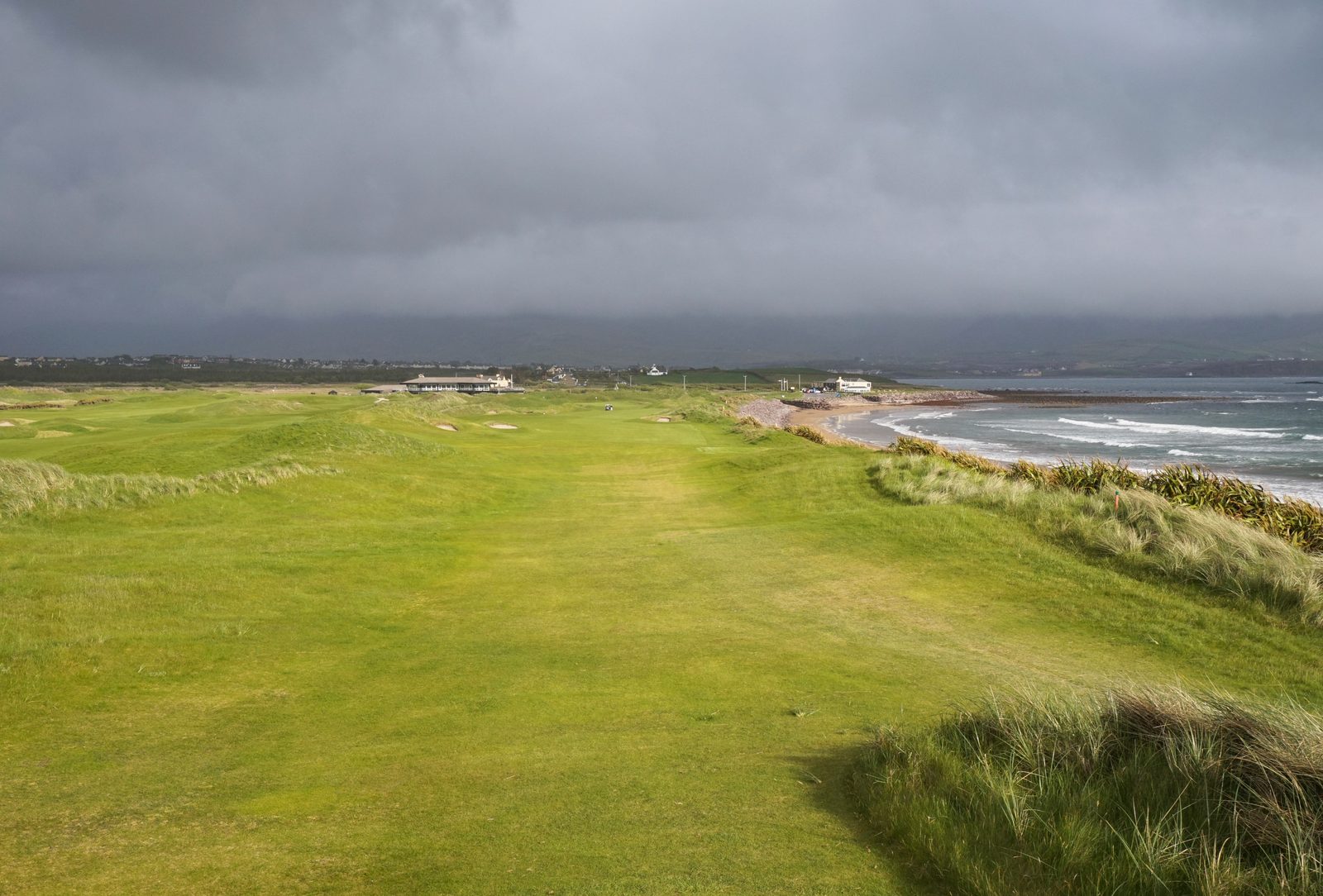
This is where most international trips begin. The Kerry guide covers the region in full, but the headline courses are Ballybunion Old Course — raw dune land on the Atlantic, no gimmicks, one of the finest courses in the world — and Waterville, similarly spectacular and less busy than it deserves to be. Tralee — Arnold Palmer's first design in Europe, dunes and cliffs on the Barrow peninsula — completes the Kerry trio. All book direct with the club, well in advance.
In Clare, Lahinch Old Course is the most fun of the top-tier links — quirky, brilliant, and five minutes from a good pub. Doonbeg, forty minutes south, is the modern contrast: a serious course built into extraordinary dune land. For something quieter, Castlegregory on the Dingle Peninsula is an honest, affordable links above Brandon Bay that most visitors skip entirely. Their loss.
The west coast
The Wild Atlantic Way guide covers this stretch in detail. The standout is Carne in Belmullet, Mayo — ninety minutes from anywhere and one of the most remarkable pieces of links land in Ireland. County Sligo Golf Club at Rosses Point has hosted the West of Ireland Championship for over a century and looks out to Benbulben mountain. Ballyliffin on the Inishowen Peninsula is the most northerly links in Ireland, with two courses worth the journey. Donegal has more besides: Rosapenna — the world's first golf resort, now with three links including Tom Doak's world-top-100 St Patrick's — and Donegal (Murvagh), a huge, undervalued Eddie Hackett links on Donegal Bay. They book direct with the club.
Dublin and the east coast
The east coast has more links than its reputation suggests. Portmarnock, Royal Dublin and The Island are all within half an hour of Dublin Airport. North in Louth, County Louth (Baltray) — where Shane Lowry won the 2009 Irish Open as an amateur — is one of Ireland's purest links, with Seapoint right next door for a great-value second round.
Northern Ireland
The Northern Ireland guide covers this in full. The short version: Royal Portrush hosted The Open Championship in 2019 and is one of the finest links in the world. Royal County Down in Newcastle is consistently ranked in the world's top five, with the Mourne Mountains behind and Dundrum Bay in front. Portstewart Old Course is the one locals actually play and is often overlooked by visitors — a mistake.
How to play links golf
Take one more club than you think you need into the wind. One less downwind. When in doubt, keep the ball below the hole — putting uphill on links greens is far easier than putting downhill.
Leave the lob wedge in the bag for most approach shots. A bump-and-run from forty yards with an 8-iron is more reliable than a flop shot over a bank. The ground is your friend. Use it.
Don't fight the wind — work with it. A controlled fade into a left-to-right wind is more useful than trying to hit straight and having the ball carried offline. Watch where the locals aim. They have been playing the course in all conditions for years. There is usually a reason they aim fifteen yards left of where you think you should.
When to go
May, June, and September are the best months. Long daylight hours, reasonable weather, and the courses are in good condition. July and August are peak season — busier and more expensive but the weather is as reliable as Ireland gets. April can be excellent but cold. October onwards the weather is more unpredictable, though the courses are quieter and often cheaper.
Book well in advance for the top-tier courses — Ballybunion, Waterville, Lahinch, Royal Portrush, and Royal County Down fill quickly from May through September and don't need to discount.
Planning your trip
Fly into Shannon for Kerry and Clare. Fly into Belfast for the north coast. Dublin works if you are combining courses across the island and have time to drive. Rent a car — there is no practical alternative for getting between courses.
Allow at least seven days if you want to play more than one region properly. A week based between Kerry and Clare covers the classic Shannon circuit — Ballybunion, Waterville, Lahinch, and Doonbeg — with time for scenery and evenings in the pub. See the 7-day itinerary for a day-by-day plan.
Where to stay & book
Base yourself on the links coast: browse hotels in Lahinch, Ballybunion or Portrush, then build the whole trip — courses, bases and hotels — in one place.
Common questions
What makes links golf different from parkland golf?
Links courses are built on sandy ground near the sea, shaped by wind and weather over centuries. There are few trees, firm fast-running fairways, deep pot bunkers, and constant wind. The ground game matters as much as the aerial game. Shots behave unpredictably — that unpredictability is the point.
How should I adjust my game for links golf?
Play the ball lower — bump and run rather than high approach shots. Take one more club into the wind than you think you need. Accept that good shots will get bad bounces. Local knowledge from a caddie is invaluable on an unfamiliar links.
Do I need a handicap certificate to play links courses in Ireland?
Most top links courses require a current handicap certificate or club letter of introduction. A handicap of 28 or under (men) or 36 (women) satisfies most clubs. Bring your club card.
What is the best links course in Ireland?
Royal County Down in Newcastle is the most consistently ranked number one in Ireland and regularly top five in the world. Ballybunion Old Course, Waterville, Lahinch, and Royal Portrush are all in the conversation depending on who you ask.
Are Ireland's links courses walkable?
Yes — all major links courses in Ireland are walking courses. Caddies are available at most top venues and are worth every cent. Buggies are not permitted on most traditional links courses.
Book these courses
Ready to go?
Plan your Ireland trip
Build a full itinerary — courses, bases, and hotels — in minutes.
Start planningHow the planner works →