
Donegal Golf Club (Murvagh)
Donegal Town, Co. Donegal · Designed by Eddie Hackett (1973) · Est. 1973
Why this Edge Score: Eddie Hackett's big, raw championship links stretches over 7,400 yards across a wooded peninsula in Donegal Bay beneath the Bluestack Mountains. Long, exposed and genuinely undervalued, Murvagh is one of the most rewarding links in the northwest and earns a place in our Irish top twenty.
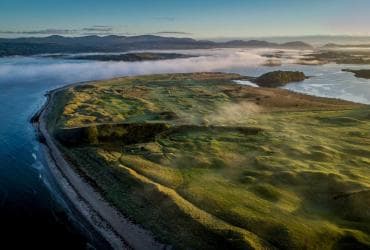
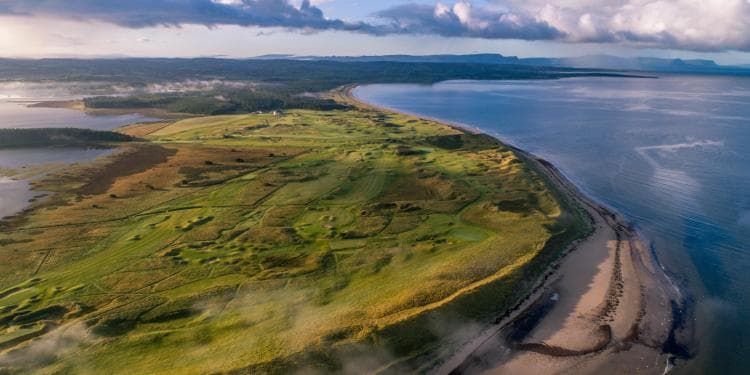
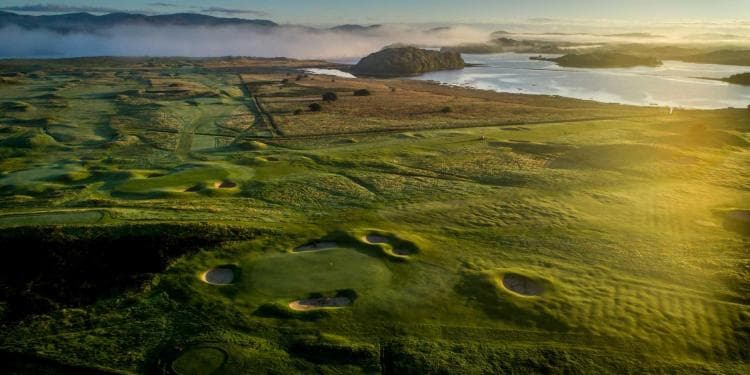
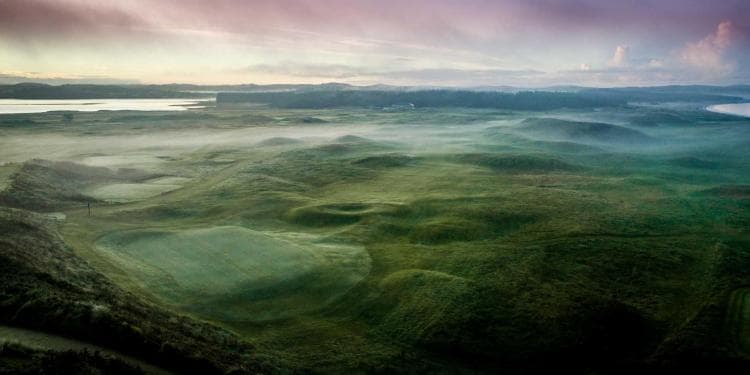
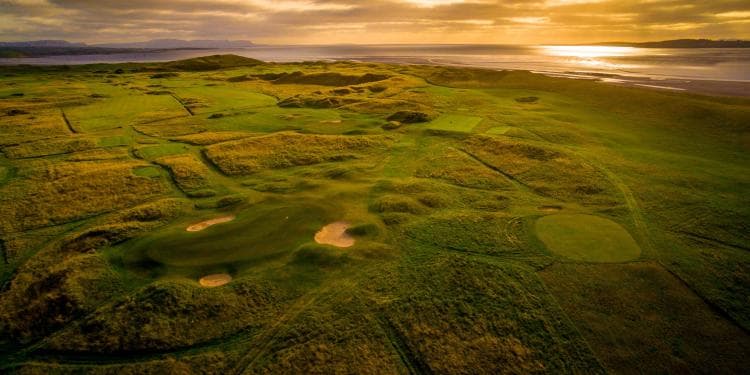
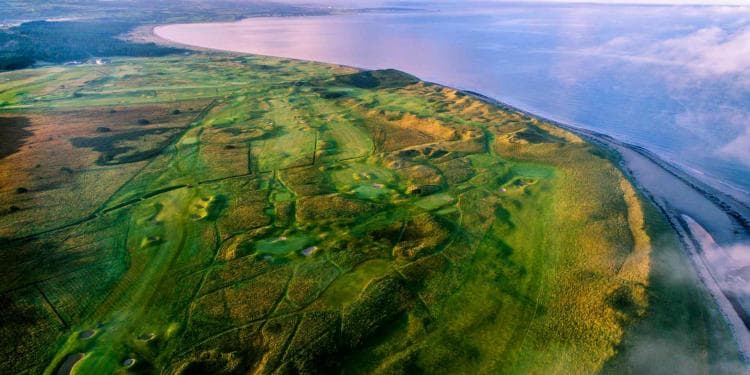
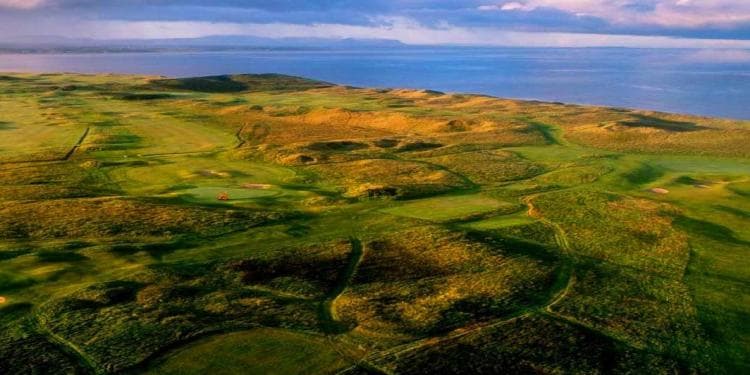
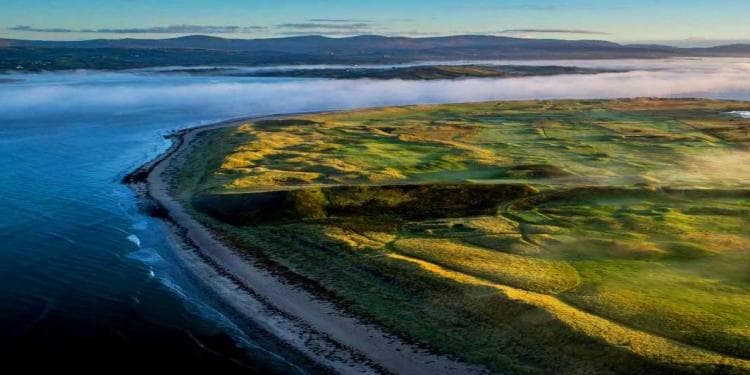
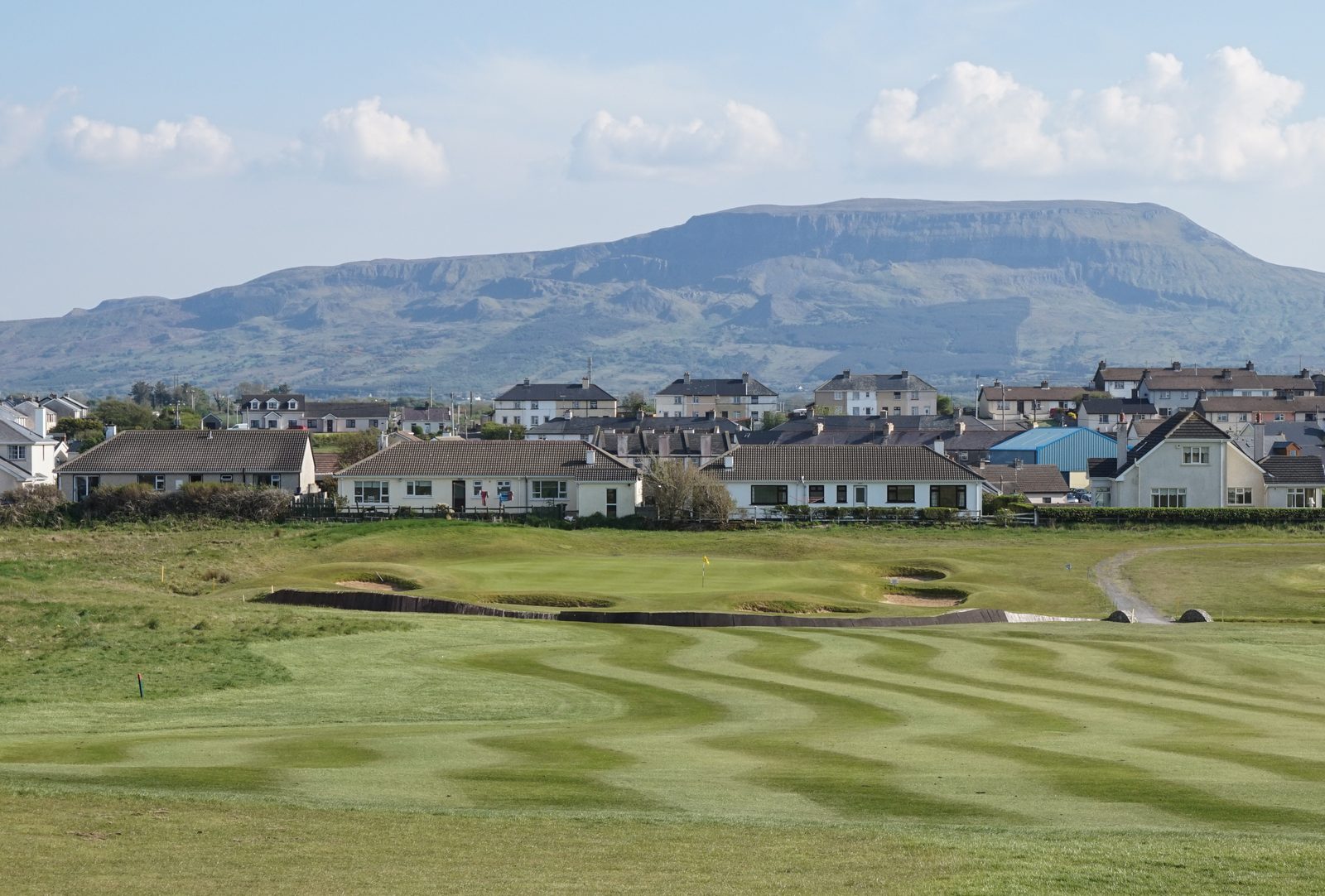
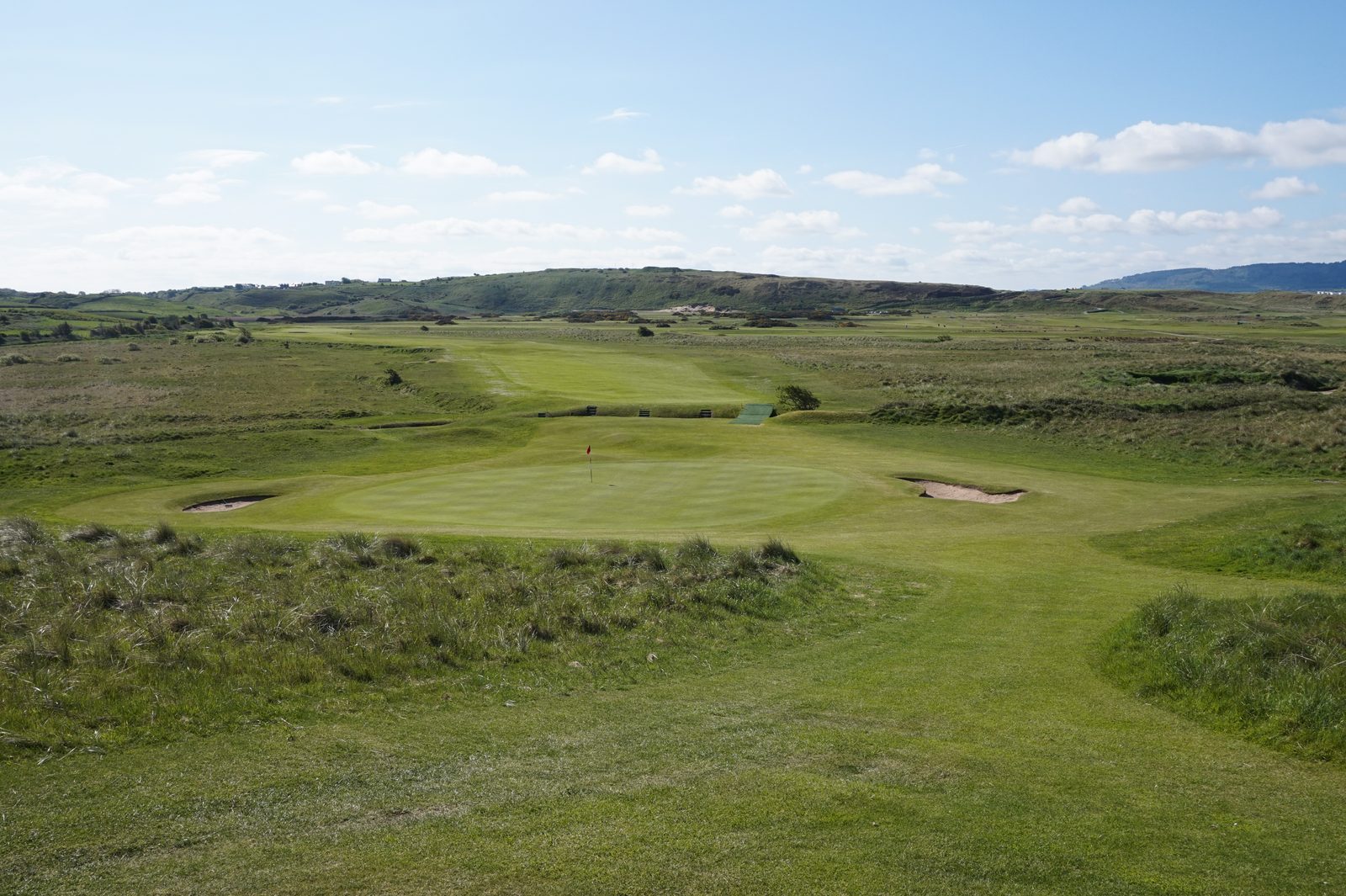
Donegal Golf Club — known to everyone as Murvagh, after the forested peninsula it occupies — is one of the great undervalued links in Ireland. Eddie Hackett laid it out in 1973 on a spit of duneland jutting into Donegal Bay, with the Bluestack Mountains rising inland and the Atlantic on three sides. It is big, raw and remote, and it asks a serious question of every golfer who finds it.
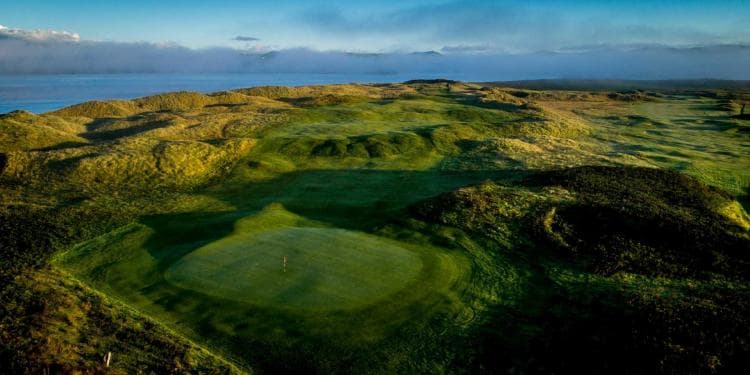
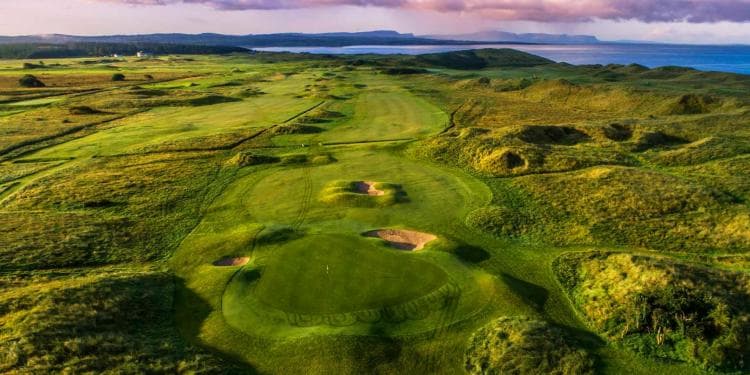
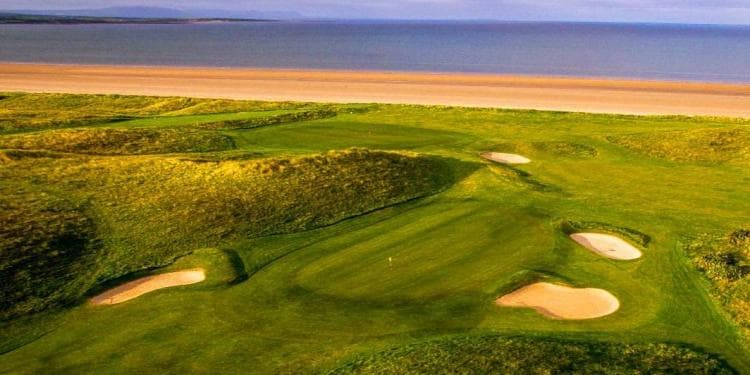
The course stretches to a mighty 7,450 yards from the back tees — among the longest in the country — at par 73, after Pat Ruddy added length over the years. The front nine runs counter-clockwise around the perimeter of the peninsula; the back loops back inside. The signature is the par-3 5th, "The Valley of Tears," played from an elevated tee across a sea of bunkers and dune to a green that gives nothing away.
Murvagh is about ten minutes south of Donegal Town, and for the quality and scale of the links the green fee is remarkable. It pairs naturally with Rosapenna to the north and County Sligo (Rosses Point) just south on a northwest links run.
Holes worth knowing
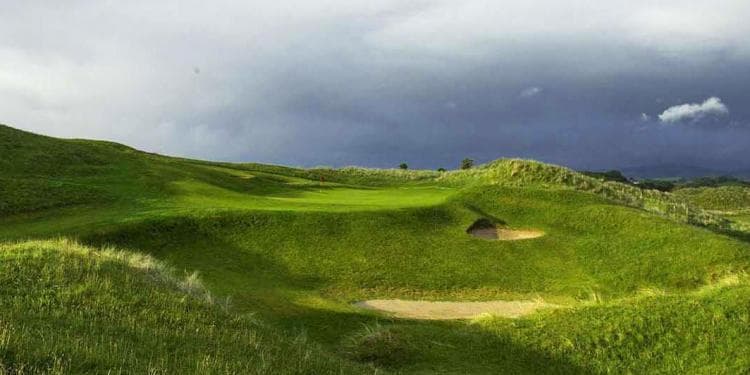
- 15th "The Valley of Tears" (par-3) — from an elevated tee across a chaos of bunkers and dune to an unforgiving green. The most feared short hole at Murvagh and the one that gives the course its reputation.
Highlights
- Eddie Hackett links (1973) — among the longest in Ireland at 7,450 yds
- Par-3 5th "The Valley of Tears"
- Donegal Bay duneland with Bluestack Mountain views
Good to know
- →For the scale and quality of the links the green fee is exceptional — Murvagh is one of the best-value championship links in the country.
- →It sits on a forested peninsula ten minutes south of Donegal Town; the drive out through the woods to the clubhouse is part of the sense of arrival.
- →Pair it with Rosapenna to the north and County Sligo (Rosses Point) just south for a northwest links tour.
- →It is big and exposed — take enough club, and on a windy day enjoy it rather than fight it.
Visitor Information
Getting There
Common questions
Why is Donegal Golf Club called Murvagh?
It is named after the forested peninsula it occupies, jutting into Donegal Bay, and almost everyone refers to the club simply as Murvagh. Eddie Hackett laid out the links there in 1973, with the Bluestack Mountains rising inland and the Atlantic on three sides.
How long and how tough is Murvagh?
It is one of the longest courses in Ireland — a mighty 7,450 yards from the back tees at par 73, after Pat Ruddy added length over the years. The front nine runs counter-clockwise around the perimeter of the peninsula and the back loops back inside. Take enough club and respect the wind.
What is the signature hole at Murvagh?
The par-3 5th, "The Valley of Tears," played from an elevated tee across a chaos of bunkers and dune to an unforgiving green. It is the most feared short hole on the course and the one that gives Murvagh its reputation.
Is Murvagh good value, and what should I combine it with?
Exceptionally — for the scale and quality of the links the green fee is one of the best deals in Irish championship golf. It is about ten minutes south of Donegal Town, and pairs naturally with Rosapenna to the north and County Sligo (Rosses Point) just south for a northwest links tour.
Where to Stay
Live tee-time availability via Golfscape
or book direct with the club →Plan your full Ireland itinerary
Course Facts
Destination guide
Wild Atlantic Way golf
Courses, hotels, restaurants and things to do beyond the fairways.
Read the guide →
Guide
Best golf courses in Ireland
Our ranked pick of the finest courses to play across Ireland.
Read the guide →
Guide
Links golf in Ireland
What makes the Ireland links special, and where to play them.
Read the guide →