At a glance
- Best overall
- May and September
- Peak season
- June–August (book 3–6 months ahead)
- Best value
- April or October (15–25% cheaper)
- Winter
- Year-round play — daylight is the main constraint
- Wettest region
- West coast — Kerry, Clare, Connaught
- Driest region
- Southeast — Wexford, Waterford, Wicklow
The Irish golf season
Ireland's golf season is effectively year-round, which makes the best time to play golf in Ireland a question of conditions, not closures. Unlike many destinations, courses do not close for winter, and green fees at most clubs remain playable even in the quietest months. The question is not when you canvisit — it's when conditions, pricing, and availability align best for your trip.
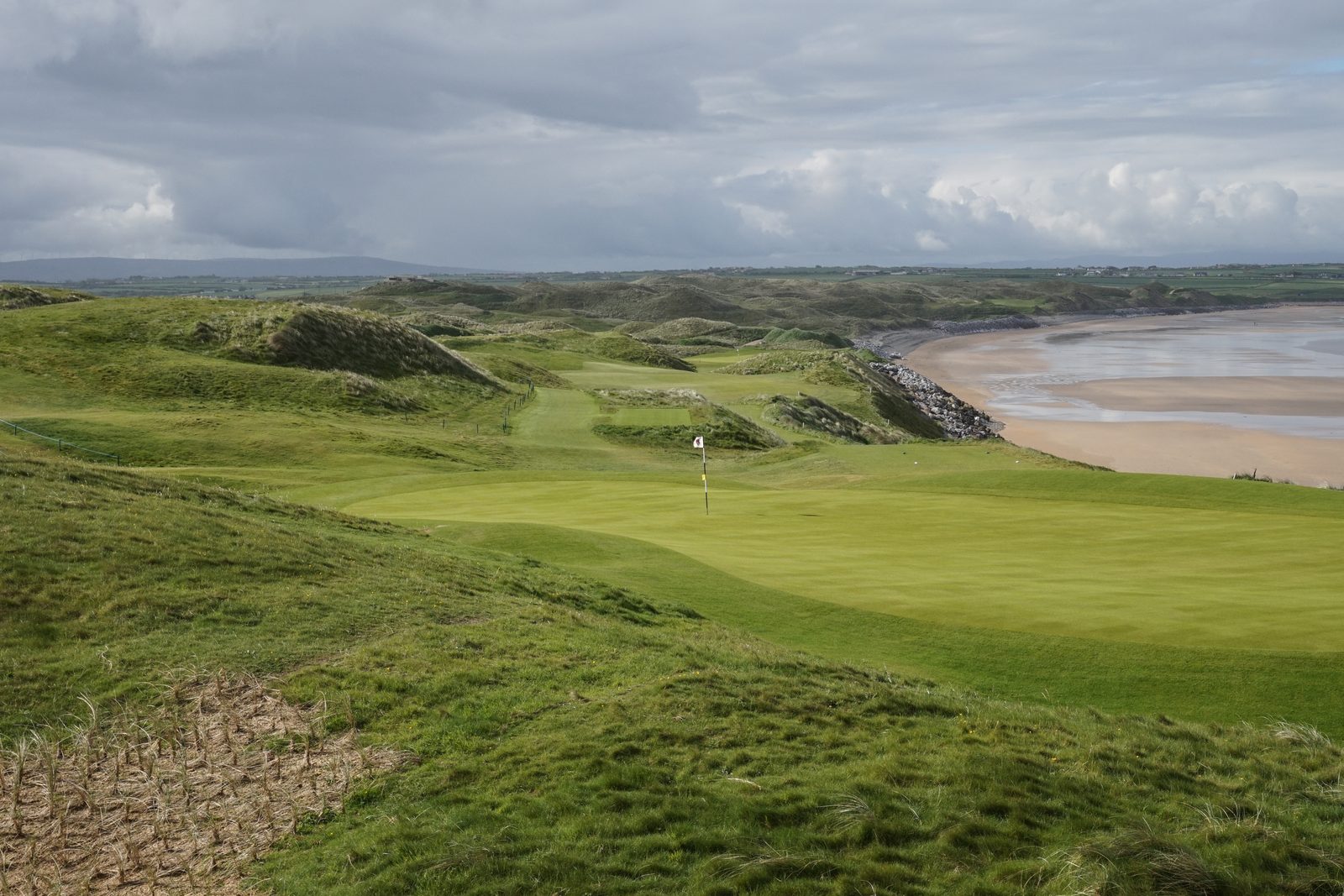
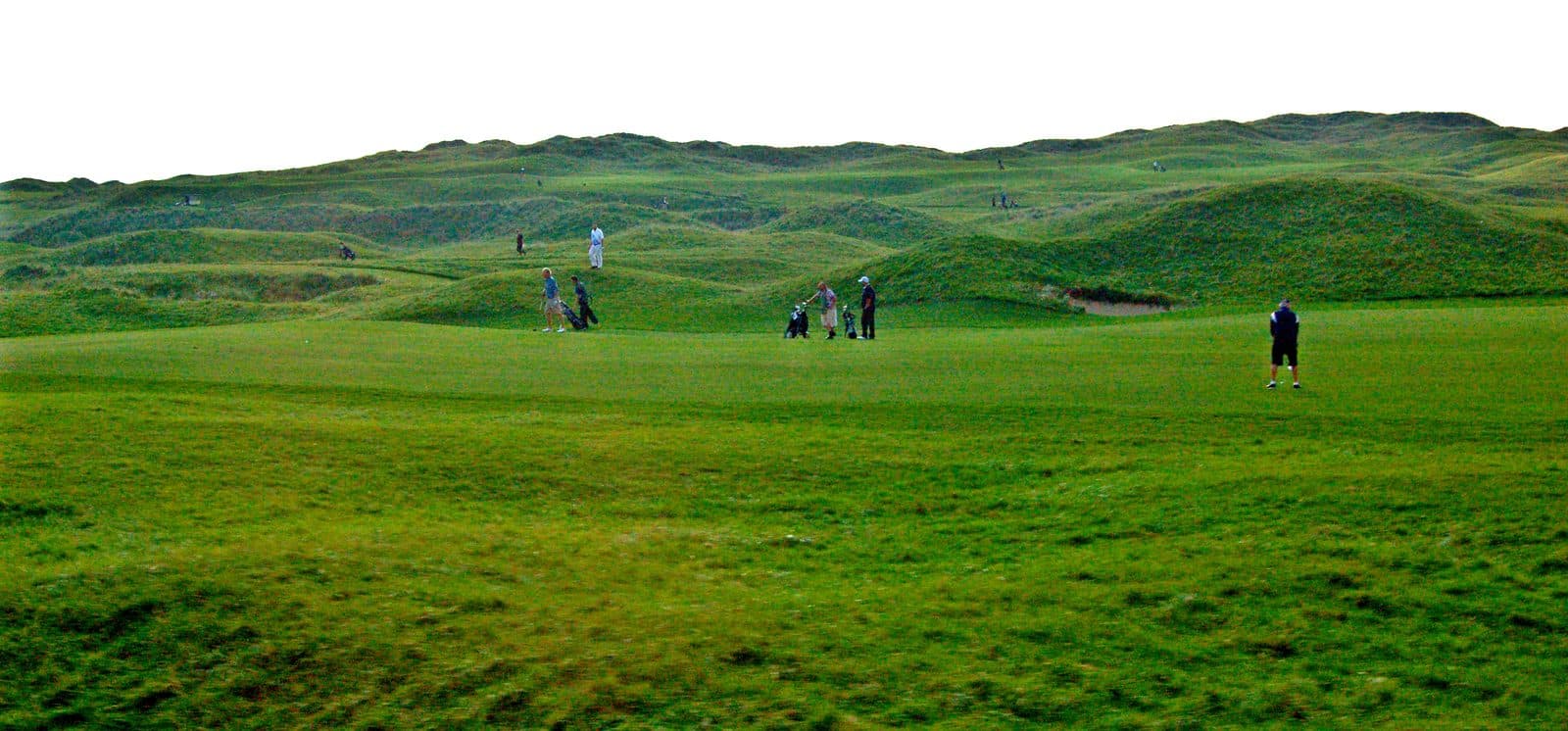
Weather is the variable that resists prediction most. Ireland sits on the Atlantic edge of Europe and can produce four seasons in a day regardless of month. The realistic goal is not to avoid rain entirely — it is to choose months where settled spells are longer, daylight is sufficient, and the courses are in the condition that makes Irish links golf distinctive: firm, fast-running fairways with the wind working across every hole.
May and September — the best months overall
If you can travel in either month, May and September are the most consistently rewarding times to visit Ireland for golf. They sit either side of the peak summer window and combine most of its advantages without the crowds or pricing.
May
Daylight runs to sixteen hours or more. The courses are at or near peak condition — winter mud has long cleared, the fairways are firming up, and the rough is not yet at its August height. Green fees at most clubs are at shoulder pricing, typically 15–25% below July and August rates. The famous courses — Ballybunion, Lahinch, Royal Portrush, Royal County Down — are bookable four to six weeks ahead rather than months.
May also tends to produce the kind of golf that links courses are built for: dry spells, easterly or northerly winds rather than sustained Atlantic rain, and ball-running conditions that reward ground game. It is the month most experienced Irish golf visitors name as their preference.
September
Early September often extends the summer. Thirteen hours of daylight, courses in excellent late-season shape, and a noticeable step down in visitor numbers from August. Green fees start dropping back at many clubs through the month. The light is different from summer — lower, warmer-toned — and the Atlantic westerlies are building. A September round at Ballybunion or Lahinch in good conditions is a different experience from the same course in July.
The risk is that autumn weather arrives early in some years. By mid-September the Atlantic becomes more assertive. Early September is reliably good; the last week of September is more variable.
Peak season — June, July, and August
The most popular months and the most expensive. June delivers up to seventeen hours of daylight, which makes evening rounds possible at most clubs until 10pm or later near the summer solstice. Temperatures range from 15–20°C on good days. The courses are full, green fees are at annual highs, and the best tee times at the famous courses require booking three to six months ahead.
July is the peak of peak season. Royal County Down, Royal Portrush, Ballybunion, and Lahinch can be genuinely difficult to book on preferred dates without planning well in advance. Hotels in the golf towns — Ballybunion, Lahinch, Portrush, Newcastle — are at their most expensive and fill quickly.
The trade-off is not that the golf is worse. The atmosphere in Irish coastal towns in summer is excellent, and the long evenings create a specific holiday quality that the shoulder months cannot replicate. If July or August is your only window, book early and accept the pricing — the experience justifies it. Rain will still happen; pack accordingly.
April and October — underrated shoulder months
April
Consistently underestimated. By late April, daylight has extended to nearly fourteen hours, the coastal links are coming back into proper form, and visitor traffic has not yet reached summer levels. Green fees are at shoulder pricing and tee times at the flagship courses are available on shorter notice. Temperatures run 10–14°C — cool by most standards, but manageable with proper layers. April produces some of the most memorable days in Irish golf: clear light, firm fairways, and the courses largely to yourself. It is the month for golfers who want the conditions without the calendar constraint of May.
October
Daylight shortens through the month — twelve hours at the start, ten and a half by the end — but early October often delivers excellent playing conditions. Summer green fees at many clubs have rolled back, courses are quieter than August, and parkland courses (Killarney, Fota Island) are in their best autumnal shape. The Atlantic is more active than in summer and wind is a consistent factor. A good month for experienced links golfers who want value and do not need long evenings.
Winter golf — November through March
Most major courses in Ireland remain open year-round. Green fees in winter are at their annual low, courses are almost never busy, and booking is generally possible with very little notice. The daylight window is the constraint: from November, you are working with eight to ten hours, which limits tee times to mid-morning starts and cuts off afternoon rounds.
Irish winter golf has a specific character that a section of golfers actively prefer. A January morning at Ballybunion — grey sky, deserted fairways, the Atlantic visible and audible from every hole — is not a lesser version of the July experience. It is a different one. Conditions are wetter, the rough is longer, and the wind is stronger. But the courses are in a rawer state that suits traditional links play.
Winter is not suitable for visitors who want reliable good weather or the social atmosphere of the peak season. It suits golfers who have played Ireland before, know what they want, and are willing to work around the daylight constraints to play courses they could not otherwise get on easily.
Regional variation
Ireland's weather is not uniform. Knowing the regional differences helps when building an itinerary around weather risk.
The west coast
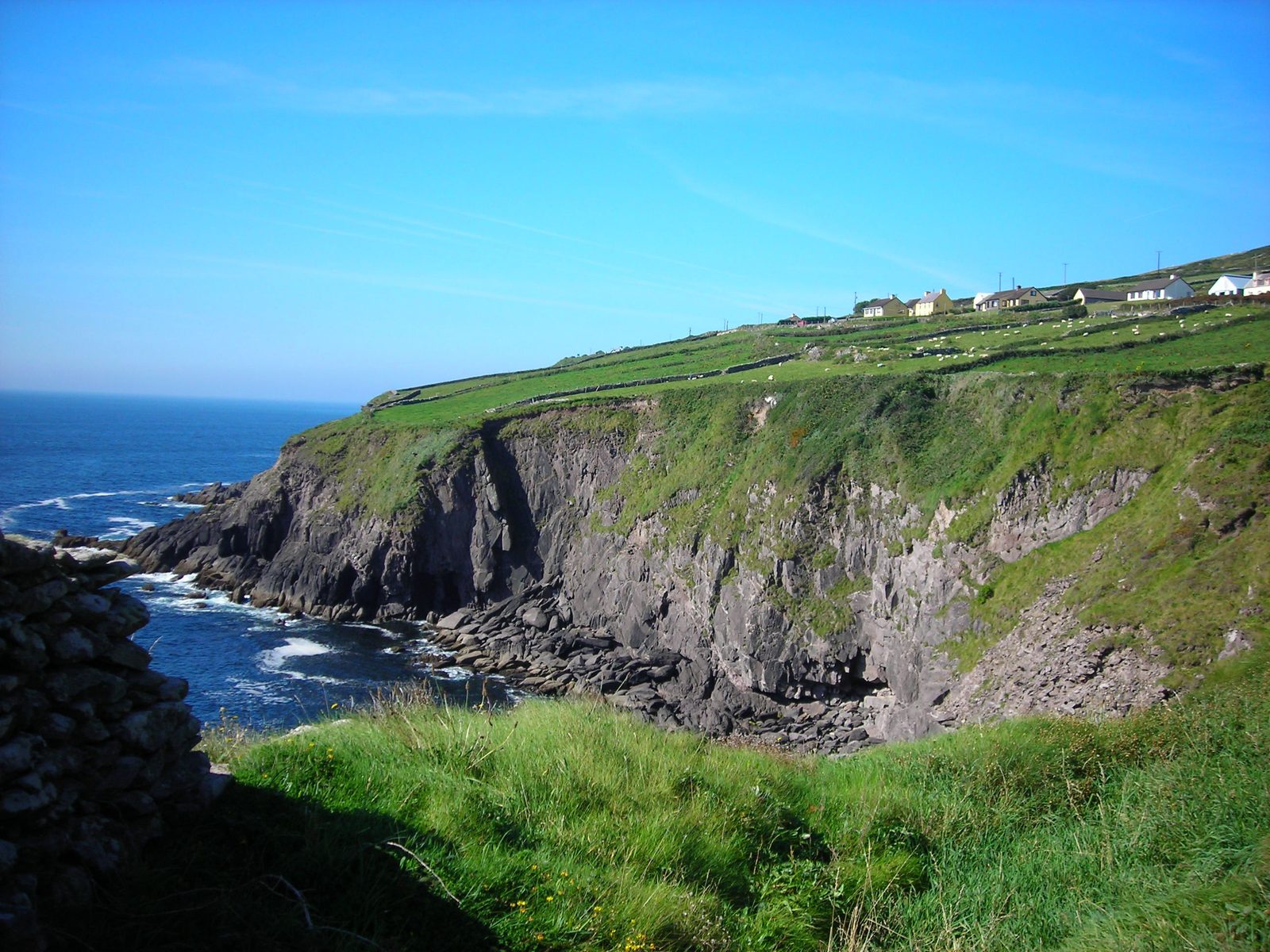
Clare, Kerry, Galway, Mayo, and Sligo — where most of the famous links courses sit — are the wettest and windiest part of Ireland. The Atlantic arrives here first and with the most force. May and September are the best hedges against sustained rain on the west coast; summer offers the best odds of dry spells but guarantees nothing. Wind is present on every month without exception and is the defining condition for west coast links golf.
The southeast
Wexford, Waterford, and Wicklow are statistically the driest and sunniest counties in Ireland. A southeast-focused trip (Rosslare, Tramore, Wicklow, Druids Glen) carries meaningfully lower weather risk than a west coast itinerary. This is underappreciated by most visiting golfers who default to the famous western corridor.
Northern Ireland
Royal Portrush and Royal County Down sit on the north Antrim and Down coasts respectively. Weather patterns are broadly similar to the Republic's northeast — drier than the west, with Royal County Down at Newcastle often getting the benefit of the Mourne Mountains blocking some Atlantic weather. Midweek availability at both courses is better than summer weekends throughout the season.
The midlands
Sheltered from Atlantic exposure, the Irish midlands are less wind-affected than the coasts and generally drier than the west. Parkland courses at Glasson and Esker Hills are genuinely all-season destinations — the reduced daylight in winter is the main constraint, not the weather.
What to pack for any month
Waterproof jacket and trousers are non-negotiable regardless of season or forecast. Irish weather can produce sun, wind, and heavy rain within a single round, and the coastal links offer no shelter from any of it.
Layers matter more than warmth. A base layer, mid-layer, and waterproof shell cover the full range of Irish conditions across all but the coldest winter days. Wind is often the primary discomfort — a wind-resistant outer layer is more useful than a very warm one. Waterproof gloves are worth carrying from October through April. Soft spikes are recommended year-round on links turf.
Booking timing by season
July and August: Book the flagship courses (Ballybunion, Lahinch, Royal Portrush, Royal County Down, Old Head, Waterville) three to six months ahead. Hotels in golf towns fill at similar lead times. Do not leave summer bookings to within four weeks of travel.
May and September: Four to six weeks ahead is usually sufficient for most courses, including the top names. Some weekends in late May and early September require eight weeks. Hotels in shoulder season are bookable closer to travel.
April and October: Two to four weeks ahead for most courses. Many tee times available on shorter notice. Some midweek slots at even the best courses are bookable same week.
November through March: Bookable on very short notice at almost every course. Same-week and same-day tee times are common. Green fees are at their annual lowest.
Where to stay & book
Base yourself near the golf: browse hotels in Lahinch, Killarney or Newcastle, Co. Down. Once your dates are set, book tee times at Ballybunion, Lahinch, Royal County Down or Royal Portrush — or build the whole trip in one place.
Common questions
When is the best time to visit Ireland for golf?
May, June, and September are the sweet spot — long daylight hours, the best chance of decent weather, and manageable crowds. July and August are peak season: busier and more expensive, but still excellent. April and October suit golfers who want fewer people and lower costs.
Does it rain a lot in Ireland in summer?
Ireland's weather is unpredictable year-round. Even in July, expect rain at some point during a week-long trip. The west coast (Kerry, Clare, Connaught) is wetter than the east. Dress appropriately and go out regardless — the courses play in all conditions.
Is October a good month for a golf trip to Ireland?
Yes — October is arguably the best-value month. Courses are quieter, accommodation is cheaper, and the autumn light is beautiful. Early October often has excellent playing conditions. Days are shorter but there is still enough daylight for 18 holes.
Can you play golf in Ireland in winter?
Most courses stay open year-round, though some close for maintenance in January and February. Daylight is the main constraint — you have 7–8 hours in December. Green fees are at their annual low and courses are almost never busy.
How far in advance do I need to book courses for peak season?
For July and August, book flagship courses (Ballybunion, Lahinch, Royal Portrush, Royal County Down) 3–6 months ahead. For May and September, 4–6 weeks is usually enough. April and October: 2–4 weeks, sometimes shorter.
Ready to go?
Plan your Ireland trip
Build a full itinerary — courses, bases, and hotels — in minutes.
Start planningHow the planner works →