
 Photo: Wikimedia Commons
Know before you go: self-drive golf in Scotland
Scotland · Practical guide
At a glance
- Driving
- On the left · Highland single-track (passing places)
- Car hire
- Book an automatic early
- On course
- Walking; caddies worth it; buggies restricted
- Watch for
- Midges inland (Jun–Aug) · low drink-drive limit
- Currency
- Pound sterling (£)
First, the short version
Scotland is the home of golf and one of the finest self-drive trips in the game — but the Highlands are not the Home Counties. You will be driving on the left, sometimes on single-track roads with passing places, to courses where you walk and often take a caddie. Add the Old Course ballot, the famous weather and a midge or two, and a little preparation goes a long way. Here is the practical brief before your first trip.
Driving on the left — and hiring the right car
Driving on the left is the main adjustment for visitors from North America and mainland Europe, and it settles within an hour. Watch the roundabouts (clockwise, give way to traffic already on it) and the gearstick on your other side. As in Ireland, book an automatic well ahead — most hire cars here are manual and automatics are limited and pricier in season — and size up to an estate or mid-size SUV so four bags and four players actually fit.
One Scotland-specific point: the drink-drive limit is lower than in England and strictly enforced. With a whisky trail on every corner, the safe rule is simple — if you are driving, do not drink at all, and save the drams for the evening once the car is parked.
Single-track roads and realistic drive times
The central belt and the coasts have good fast roads, but the Highlands and the far north and west run on single-track roads — one lane with marked passing places. The etiquette is easy and important: pull into a passing place on your left to let oncoming traffic through or to let a faster car behind you pass, and give a wave of thanks. Never park in a passing place. It is slow, beautiful driving, so build in far more time than the map implies.
Cluster your golf by region — Fife and East Lothian for the classics, Ayrshire for the Open links, the Highlands for the wild north — and keep transfers short. A long drive north after a windy eighteen is a poor plan; a lighter round or a rest evening between marquee courses is a much better one.
On the course: walking, buggies and caddies
Scottish golf is a walking game, and on the great links buggies are the exception — often restricted to medical need, sometimes not offered at all. Trolleys are widely available, and on courses with blind shots and hidden bunkers a caddie earns the fee several times over. Budget from around £50, more at the famous links, plus a tip of £20–30 for a good one, and book them with your tee time.
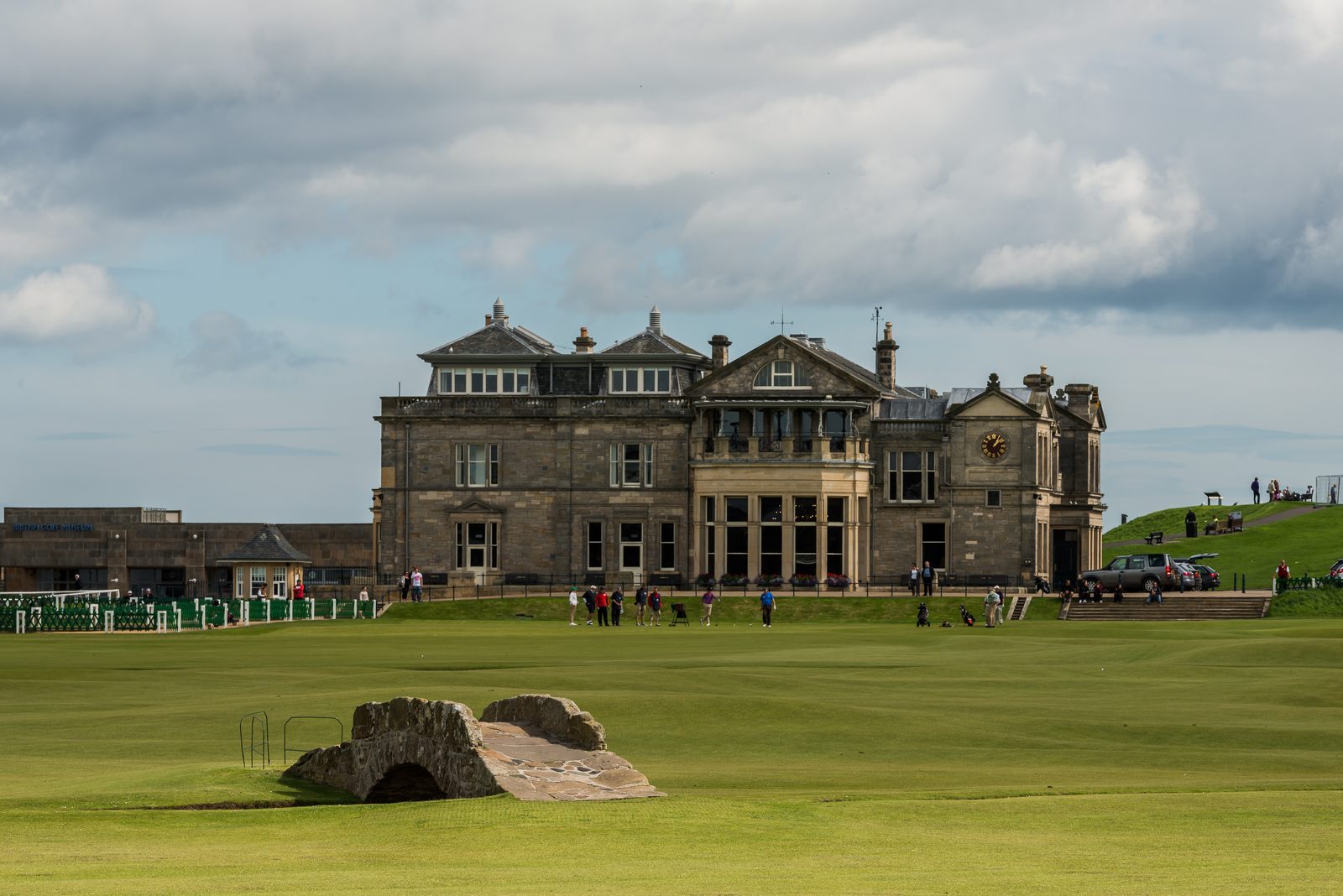
The Old Course deserves its own note: it is walking only, there is no play on Sundays, and visitors need proof of handicap (24 for men, 36 for women). Tee times come via an advance reservation released about a year ahead or a daily ballot entered two days before — read our Old Course guide before you plan around it.
Dress code, handicaps and etiquette
A smart golf dress code is standard: collared shirt, tailored trousers or shorts, no denim or gym wear, and a tidier standard again in many clubhouses. Carry a handicap certificate — the Old Course requires one, and a few of the members' clubs ask visitors for proof, sometimes on limited visitor days only, so check each course's access before you book flights. “Ready golf” is expected: keep pace, wave quicker groups through, and leave the course as you found it.
Weather, midges and what to pack
The weather is changeable and the wind is part of the test — pack proper waterproofs, spare gloves, and warm layers even in July. A bonus of a summer trip is the daylight: in June it is light until well after 10pm, so an evening nine after dinner is entirely possible.
The one genuinely Scottish nuisance is the midge — a tiny biting insect found in the Highlands and west from roughly June to August, worst at dawn and dusk in still, damp air. The good news for golfers is that the coastal links are usually breezy enough to keep them away; it is inland, sheltered evenings where a repellent (locals swear by Smidge or Avon Skin So Soft) earns its place.
Booking windows, money and the small stuff
Peak season (June to August) books early at the famous courses — three to six months ahead, and the Old Course ballot is its own timeline. May and September are the sweet spot for conditions, value and availability. Book the hardest-to-get courses first and build around them.
Scotland uses the pound sterling. Cards work almost everywhere, but carry some cash for caddies, small clubs and Highland stops. Tipping is modest away from caddies. Mobile coverage is patchy in the glens and the far north, so download maps offline before a Highland drive.
Where to start
With the logistics handled, build the trip. Use the Scotland trip planner, check when to go, and follow the 7-day itinerary for a proven route. Then browse the best courses in Scotland and get to know how to play a links before you tee it up.
Common questions
How do I drive single-track roads in the Highlands?
Many Highland and far-north roads are one lane with marked passing places. Pull into a passing place on your left to let oncoming traffic through, or to let a faster car behind you pass, and give a wave of thanks. Never park in a passing place.
Do I need to worry about midges in Scotland?
Midges are tiny biting insects found inland in the Highlands and west from about June to August, worst at dawn and dusk in still air. The good news for golfers is that the coastal links are usually breezy enough to keep them away; carry a repellent for sheltered evenings inland.
How do I get a tee time on the Old Course?
You need proof of handicap (24 for men, 36 for women), there is no play on Sundays, and tee times come via an advance reservation released about a year ahead or a daily ballot entered two days before. See our Old Course guide before planning around it.
Can I have a whisky at lunch and drive?
Scotland’s drink-drive limit is lower than England’s and strictly enforced, so if you are driving the safe answer is not to drink at all. Save the drams for the evening once the car is parked.
Book these courses
Ready to go?
Plan your Scotland trip
Build a full itinerary — courses, bases and hotels — in minutes.
Start planningBrowse all Scotland courses →


