
What 'links' actually means
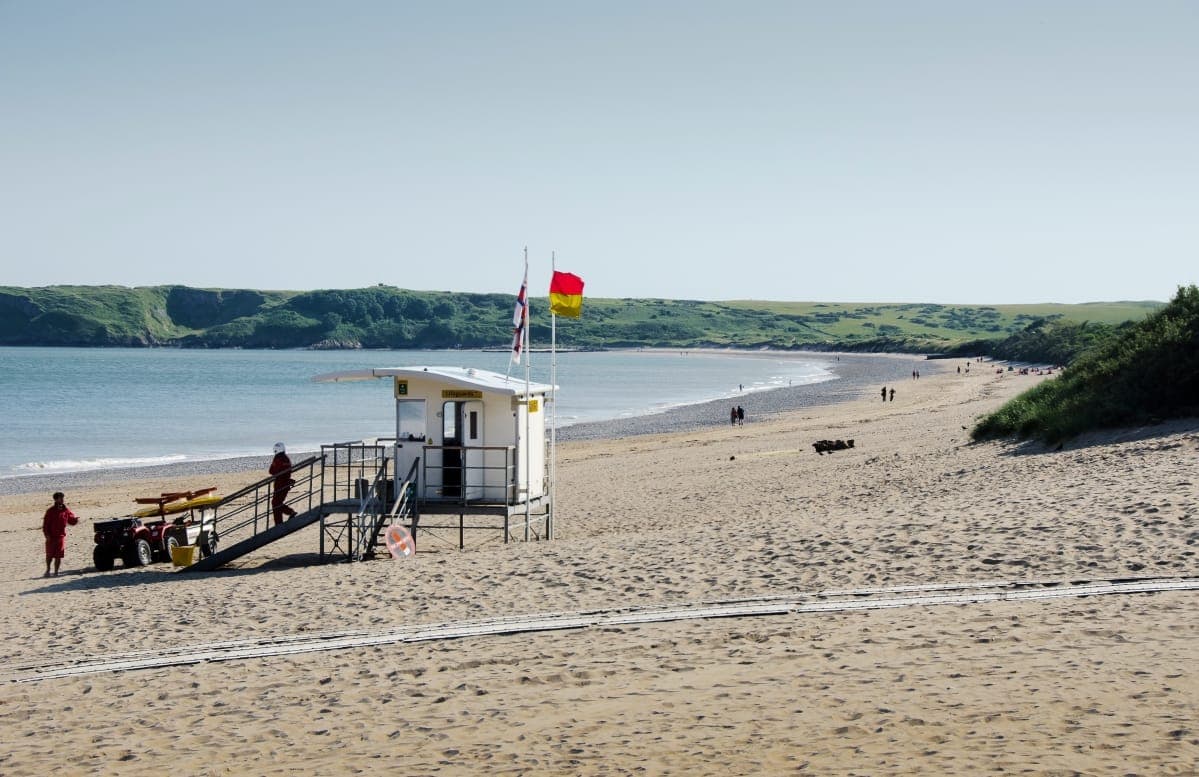
A true links is golf on the sandy, undulating ground that “links” the sea to the land behind it — firm, fast-running turf over old dunes, with no trees, framed by gorse and marram grass and fully exposed to the wind off the water. It is the oldest and purest form of the game, and Wales, with its long, wild coastline, has a remarkable run of it — Royal Porthcawl and Royal St David's among the finest links anywhere in Britain.
The turf is the secret. Fine fescue grasses on free-draining sand give fairways that stay firm even after rain and greens that run true and quick — which is why the great Welsh links play so well nearly year-round, and feel so different underfoot from the lush, watered courses most visitors know from home. And the great Welsh advantage runs through all of it: this is world-class links golf at a fraction of the green fees across the water.
It plays nothing like parkland
If you have only played target golf — flying the ball to a soft green and stopping it by the flag — links will surprise you, in the best way. Here the ball lands and runs, sometimes for thirty or forty yards, so the ground game is everything. The best links players think about where the ball finishes after it lands, not just where it pitches: they bump-and-run through the front of the green, use the slopes to feed the ball toward the hole, and putt from well off the putting surface rather than risk a delicate chip off tight lies.
It rewards imagination and a low, controlled ball flight over raw power. A modest hitter who plays cannily along the ground will often out-score a big hitter who only knows how to fly it high — a large part of the charm, and part of why Welsh links are such fun for golfers of every standard.
The wind — the great defence
Wind is the primary defence of every links, and the reason the same hole can play two or three clubs different from one day to the next — nowhere more so than on the exposed Welsh coast, where the Atlantic and the Bristol Channel funnel the breeze straight across the fairways. Learning to manage it is the single biggest thing that will improve your scores.
Keep the ball low: a knock-down shot — ball back in the stance, hands ahead, a smooth three-quarter swing — bores through the breeze far better than a high approach the wind will balloon off line. Into the wind, take more club and swing easier, not harder (hard swings add spin, and spin is the enemy in wind). Downwind, allow for the extra flight and run. In a crosswind, it is usually safer to aim into the wind and let it bring the ball back than to ride it and hope.
Pot bunkers and hidden trouble
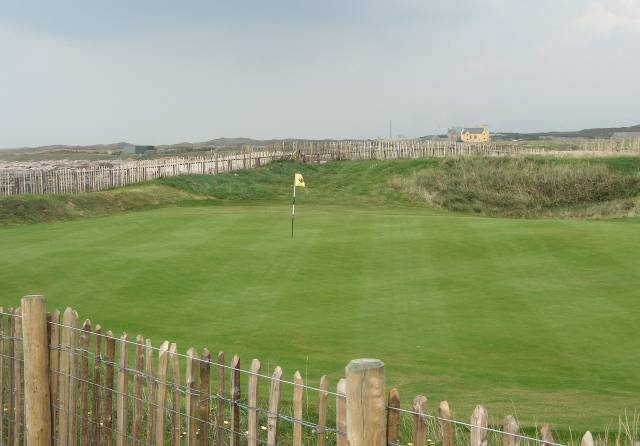
Links bunkers are deep, revetted pot bunkers, their faces built up with stacked turf, and they are genuinely penal — often your only option is to splash out sideways or even backwards and move on. Aiming away from them off the tee is smarter than flirting with the ideal line.
Many classic Welsh links also have blind shots and greens tucked behind dunes — Pennard, Nefyn and Tenby are full of old-fashioned character — so a marker post and a bit of local knowledge go a long way on an unfamiliar course.
How to play it — the short version
- Play along the ground. Bump-and-run and putt from off the green whenever you can.
- Keep it low in wind. A three-quarter knock-down beats a full, high shot.
- Club up, swing easy into the breeze. Less spin, more control.
- Respect the pot bunkers. Aim away from them; escape sideways when caught.
- Walk it — most Welsh links are walking courses, and all the better for it.
- Embrace the bounce — good and bad. It is the game as it was meant to be played.
What to expect — pace, walking and weather
Welsh links golf is a walking game and a relaxed one — the tee sheets stay quiet even in summer, so you rarely feel rushed, and buggies are the exception rather than the rule. Bring proper waterproofs and layers whatever the forecast, because the weather off the Atlantic can turn in minutes, and a bright morning can be blustery by lunch. Playing a Welsh links in a stiff breeze is a rugged pleasure — and, at these green fees, an astonishing bargain for the quality on offer.
Where to start
For your first Welsh links, Royal Porthcawl is the country's finest and has the sea in view from every hole; Royal St David's beneath Harlech Castle is the great value round of British golf; and the clifftop Nefyn, Aberdovey and Tenby show the form at its most scenic and characterful. See the best courses in Wales and the week-long itinerary to build your trip, and check when to go.
Where to stay & book
Base yourself on the coast: browse hotels in Porthcawl, Harlech or Tenby, then build the whole trip — courses, bases and hotels — in one place.
Book these courses


Ready to go?
Plan a Welsh links trip
Build a full itinerary — courses, bases and hotels — in minutes.
Start planningBrowse all Wales courses →


